Fishing Hook | Trout Worm

Just like there are more ways to filet a fish, there are more than one way to thread a worm on the hook.

Fishing Hook

Worms are the best type of bait and there several ways to thread a worm on a hook.  I was recently asked by an angler who has just picked up the act of fishing how to put the worm on the hook.  His method continued to result in fish taking pieces of his fishing bait worm but failing to get the hook in the fish’s mouth.

The following illustrations depict several methods of rigging a trout worm onto a hook.

Honey worm or meal worm
This illustration shows a honey worm or meal worm threaded onto the shaft of the hook.  This is one of the best methods for rigging any type of bait worm if you plan on introducing any action such as luring or jigging.  I prefer night crawler imitations or honey worms made by Berkley.  Cut the tail so that it is slightly extending past the hook bend as you don’t want to give the fish enough worm tail to chew on.

The illustration to the right shows a worm hook rig that is more ideal of vertical bobbing or floating up from a bottom water fish finder type fishing rig.  Leave some tail extending out to help entice a strike by it’s subtle movement.  Live worms work exceptionally well for this type of worm hook configuration.

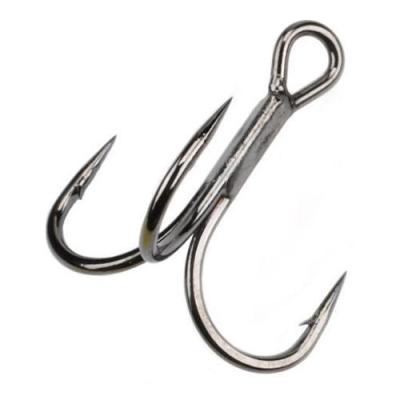
This illustration to the left is intended to depict a worm pierced through several segments of it’s body so it looks like it is handing on to the hook.  This is also a great configuration when using a bobber with limited or no action.

Tube Jig | Plastic Bait

Versatile Artificial Bait – Crayfish Imitations
Tube Jigs are perfect for when nothing else seems to work.  It is a simple plastic bait but consistently delivers in tough conditions.

What is a Tube Jig
Tube jig plastic bait are round headed, hollowed plastic tube that have a streamers at the end. Tube jigs are threaded onto a jig head or lead head with the hook protruding through the end by the streamers.  Tube jigs are designed to be fished with a slow, subtle action that imitates a minnow or crayfish depending how it is fished.

How to Rig a Tube Jig Plastic Bait
Insert the hook in the top quarter of the plastic bait and thread the hook to where it is protruding from the end of the tube where the hook point is above the streamers.  The tube body is flexible and will allow the jig head or lead head to be inserted into the tube.  Insure the leader line is also attached to the jig head.

How to Fish a Tube Jig
Tube jigs are designed to imitate a fleeing minnow or scurrying crayfish depending how it is fished.

One of the first decisions an angler needs to make after deciding to use a tube jig is to select the desired jig weight.  A light lead head will allow the tube jig to slowly descend to the bottom while a heaver tube jig will more quickly move downward and can be moved along the bottom imitating a creyfish.

The method to fish a tube jig is to use a six to eight pound test line and fish this type of plastic bait near cover where awaiting bass are lurking.  Cast the line out and keep the rod at a 45 degree angle and the tube bait will sink in one direction and once the slack in the line is tight, the plastic bait will swing in the other direction. Continue dropping this line creating this zig-zag action until it hits the bottom.  Let the tube sit on the bottom briefly before reeling up and continuing this cycle.  Another method is to allow it to hit bottom and either bounce it back or drag it slowly along the bottom.

Where to buy Tube Jigs
Ebay is always a great choice to buy fishing tackle at great prices.  This seller is selling a lot of 25 tube jigs with a beginning bid of $0.99.  If you don’t think you could win this type of auction, think again.  I won 5 piece bass popper lures for $2.00 including shipping cost.

Top 3 Fishing Accessories

Three Fishing Accessories for Shoreline Anglers

I am not one to carry the everything and the kitchen sink with me when I go fishing.  I believe in being mobile to find the fish instead of waiting for fish to find me.  As the day progresses and water temperature changes around the lake or reservoir, moving from location to location is key component to catching fish the limit.  With that being said, the accessories that I value are based on:

Fishing Accessories
  • Easy to carry or stow away
  • Provide the ability to keep or get my line back in the water as fast as possible

Basically, the accessories that I carry and value contribute to catching fish.   The following five fishing accessories fall into the above criteria and are worth having to make your fishing life easier:

1. FISHING VEST  
Fishing vest are great fishing accessory as they provide much needed pockets to keep the selection of bait that you are going to fish with in addition to other tackle such as sinkers and hooks.  A fishing vest comes in very handy for the pure mobile angler.  I vary on my technique as sometimes I will only move short distances and prefer trying out a variety of terminal tackle and baits to develop skill and explore new techniques.  During these occasions, a fishing vest is not my preferred accessory.  When being a mobile angler, select a small collection of baits that you plan on using and gather a small collection of sinkers, hooks or floats that you vary from to catch fish.  Managing your tackle to be effective when moving around the shoreline is the key and a fishing vest is a great fishing accessory for this method.

2. TACKLE STORAGE CASE
A great way to store your lures, baits, hooks, sinkers, etc is with a fishing storage binder.  A lot of people like the hard body fishing tackle boxes but I’m not one of those people.  A tackle box is simply too structured for me to move around with, even short distances.  I use a soft body tackle case similar to a gym bag that I can strap around my neck and move around with both hands free to focus on casting out ahead of me and trying to trigger a strike.  A fishing tackle utility binder as the one shown here is a great way to organize your stuff so it’s easy to get to and to pick that right lure for that water condition.  In addition, it allows you to pre-tie your lures and hooks and to keep it all in one nice, closed pocket for quick access and rigging.  I highly recommend this method of storing your fishing tackle whether being mobile is important to you or not.

3. FISHING KAYAK
Okay, I’ll admit that this is a stretch however I am on a fishing kayak hang-up right now – I must have one!
Although I do take pride in being a shoreline angler and being able to catch fish from the shore, there is definitely something about getting out on the water and fishing the hard to get to places that a shoreline angler can not get to or even someone fishing from a boat.  Fishing Kayaks such as the one shown here made by LifeTime are specially designed for fishing. They are extremely stable and designed not to flip over.  You can even stand and fish from these fishing kayaks.  These types of kayaks are light weight usually weighting less than 50 pounds and can be launched from any shore.  No need to find a marina or having to use a trailer to get your boat around.  Also, no fuel to pay for

Rocky Bottom Fishing Jigs

Rocky Bottom Fishing Jigs

Football Jigheads 
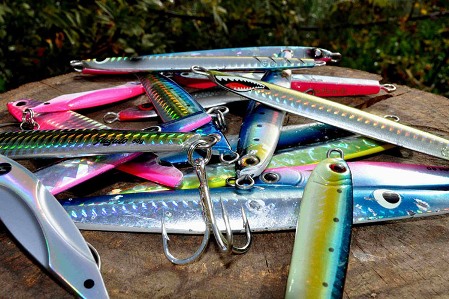
The football jighead is one of the most versatility jigs on the market and is very popular by anglers who fish structure for bottom dwelling fish. Football jigs works well around rock piles, trenches and shell beds.  This jig tempts bass from 6 feet to 40 feet and is great for exploring the bottom floor.  Once an angler finds the rock piles, focusing on creating a wave movement that allows the trailer to flutter will bring the bass to the area.

Round Jig Heads
These types of jig heads help keep the jig from getting caught on rocky bottoms.  A key benefit to round jig heads is that it is very versatile on when and where to use it as it can work best with just about any type of bait.  Utilizing a twist tail, trigger a bite on the drop during vertical jigging or luring.  Walk a bottom bait along the trenches and rock piles and entice the bottom dwelling predators.

A key element to any type of jig head is the weight.  Jigs come in a variety of sizes, weight and hook sizes and depending on the depth, terrain and species, an angler will need to accommodate to these elements.  If fishing a football jig through some cover, a heavier weight may get more hung up than a lighter jig head.

Jigging is considered a complex method to fish but with some practice, jigging will result in catches when everything else isn’t working.  The ability and versatility to adapt to changing conditions by adding different trailers that entice with movement and/or vibration is what makes jigging a preferred method to catching fish.

Fishing Pole Rack | Cheap Fishing

Fishing pole rack is an important accessory to keep you catching fish.  

To an angler the fishing pole or fishing rod is the same thing that a rifle is to a hunter.  It is important to maintain and service your fishing pole and reel between each fishing trip and use.  Fishing doesn’t have to be expensive but will quickly become so if your reel or pole is wearing out prematurely because of lack of maintenance and upkeep.

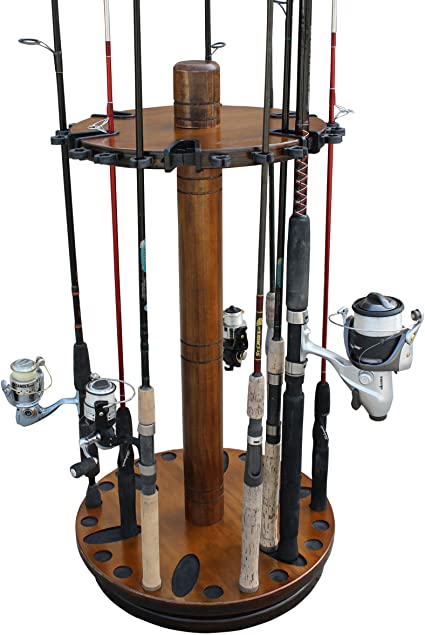
Fishing Pole Rack

A fishing pole rack is a means to store and organize your fishing poles.  In addition, storing them in a fishing pole rack will prevent any warping or bending of your pole.  For those of you who are guilty of bending and keeping your fishing pole in the trunk of  a car for prolonged periods of time you can attest that the tip will be warped from where it was stored in the bent position.  This pole warping can also occur if you leave your fishing pole leaning against a wall.

For those interested in cheap fishing stuff, check out some of these great deals:

7-Pole Rod Rack found at Sportsman’s Guide.  It cost less than $30 and stands up with its own built in stands.

Okuma Expandable ABS Rod Rack found on Amazon.  This 18 rod fishing pole rack can be wall mounted or stand up.  It cost less than $20.

Rush Creek Log Cabin Style Corner Rod Rack which also found on Amazon and is the style that I prefer. It is a good looking corner fishing pole rack that stores 12 fishing rods.  It is currently on promotion for slightly less than $60.

A fishing pole rack is worth the extra expense as it will help keep your fishing rod in a good condition when not in use.  Do a search on fishing pole racks and you will find a variety of styles and sizes to chose from and the prices range from $12 to several hundred.  For those who are handy and wish to make their own fishing pole rack, you will quickly find articles that will walk you threw how to make your own fishing pole rack which would truly be cheap fishing.

Fishing Trips | America’s Best Trout Fishing Waters

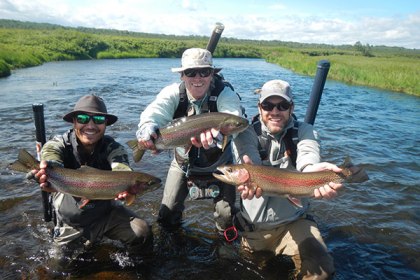
North America has some of the best trout fishing in the world.Brook Trout caught in the Wasatch Mountains, Utah Now that Fall is setting in and temperatures are dropping my excitement to head out on trout fishing trips is growing.  I call my late fall and winter fishing trips a Miserably Wonderful time of trout fishing.  The cold can make the fishing trip miserable while the allure of trout fishing and catching trout make it a wonderful outdoor experience.  Depending on the type of trout in your local waters, trout fishing can be easy and mindlessly entertaining to mind bending complex as you struggle to figure out how to trigger a strike from a trout species that doesn’t fool easily like a lake trout or brown trout.

Best Trout Fishing Waters

Forbes.com published an article several years ago listing the top ten trout fishing locations in North America. Of course this is a list that is arguable as most anglers favor their local spots but here is what Forbes published as their top ten fishing spots.

The top ten fishing trips to trout waters (according to Forbes.com)

1. West Yellowstone, Montana
The following rivers in West Yellowstone are hot trout fishing locations and would make great fishing trips due to the beauty of the area and the many alternative hot trout fishing spots to fish.  Firehole River, Gibbon River and Slough Creek are great fisheries to explore.

2. Missoula, Montana
The Blackfoot and Bitteroot river are fishing trip options as is the Missouri River where anglers can find trophy size rainbow and brown trouts.

3.  Roscoe, New York
The Delaware River, specifically the East and West Branches has some of the best trout fishing for rainbow trout and brown trout in the Eastern part of the United States.  Other fishing trip options include the Beaverkill River and the Willowemoc Creek.

4.  State College, Pennsylvania
Brown trout are abundant year around and anglers across the world take fishing trips to fish the Little J or Little Juniata.  Spring Creek is also a great option for a fishing trip while visiting State College as this creek runs directly through town.

5. Grayling, Michigan
Fishing trips here should include the Au Sable River, Manistee and Grayling rivers.

6. Calgary, Alberta
Fishing trips to Calgary offer chances to catch the biggest stream-bred rainbow trout in the world in the Bow River. Two other mountain streams, the Crowsnest and Livingstone provide anglers an opportunity to fish for native bull and cutthroat trout.

7. Glenwood Springs, Colorado
Fishing trips to Colorado should include a stop at Glenwood Springs as the Frying Pan stream and Colorado River are great trout waters.  The Frying Pan is considered one of North America’s most consistent trout streams.

8. Mountain Home, Arkansas
Fishing trips to Mountain Home should not disappoint as the White and Norfolk Rivers have some of the biggest non-migratory brown trout in the wold.  These rivers can be fished year around and consistently produce huge brown trouts ranging around 30 pounders.

9. Redding, California
There are four areas worthy to schedule a fishing trip to.  The Lower Sacramento has some of the most power rainbows in the world.  McCloud River has the famous leaping rainbows and the Hat Creek and Fall River are  have very big and demanding trout.

10. Asheville, North Carolina
Fishing trips to Asheville brings you to brook trout country as they are the only trout native to the east coast and fishing any of the Appalachian Mountain streams would result in a fun day of catching brook trouts.
Under Armour Cold Gear

Staying warm, dry and protected while winter fishing with Under Armour Cold Gear

I’m typically an off road angler meaning I have to park and hike into where I’m planning to fish.  Since this is my preferred method of finding fishing spots that are not highly fished, I have to plan differently than an on-road fisherman.  Mobility and ease of transport of my fishing gear is my number one consideration.

Mobility to get into the area that I want to fish and then the mobility to get around the shoreline to find the fish is what it is about.  Being adequately prepared both with the essential fishing tackle and gear and cold weather gear and accessories is key to having a productive, fun fishing day or night.

The advances in high performance athletic and outdoor clothing and accessories can not be overlooked by the off-road angler.  Under Armour is an American business that provides hi-tech clothing and accessories for professional athletes.  Their under armor clothing line is ideal for the active outdoors man and the light weight, quick drying undershirts, pants and jackets are ideal accessories for hikers and active anglers.

Under Armour cold gear characteristics include:

  • Fitted form that is built for layering
  • Advance knit fabric that traps heat for enhanced warmth
  • Lightweight 4-way stretch construction improves mobility 
  • Superior moisture transport system that keeps you dry
  • Most importantly, feels smooth against the skin and prevents chafing.

Layering is key to be dry and comfortable while staying active.  Check out Ebay for some great prices on their coldgear fitted mock to build layers off of.  

I highly recommend exploring the Under Armour Cold Gear especially as we move into the late Fall and Winter months.

Winter Accessories

Winter Accessoires for Cold-weather Fishing

As an avid shoreline angler, even in winter time, standing along the shoreline welcomes in the deep cold.  There are many winter accessories that are designed to be light, warm and quick drying and being prepared will result in a fun fishing day out in the winter cold.

Cutthroat trout at Strawberry Reservoir, Utah
It is important to be prepared for the winder conditions and planning appropriately is the key to having a safe, fun cold weather fishing vacation.  To do so, plan the type of fishing you are going to participate in.  If your goal is to hike to a distant mountain lake, dressing in layers while having heavier gear accessible is important.  It’s all about the amount of movement and physical activity you are embarking on when being outdoors and the amount of and type of cold weather accessoires to have.  Many a nights, while standing along a lake shoreline, the heaviest winter gear that I have will still allow the cold to penetrate through.  Movement creates more body heat which aids in the insulation of the accessory working properly and keeping you warm.  Standing by a lake with minimal movement of casting out and reeling in or letting the line float will test any gear you got on.  Focusing on the extremities are critical as most heavy cold weather jackets trap enough body heat to keep a cold-weather angler comfortable.  Your feet and hands are more likely to feel the cold first and make any fishing winter trip miserable as time goes on and coldness sets in.  The picture of me at the top left was taken in late fall at Stawberry Reservoir, Utah.  I was wearing a heavy cold weather jacket made by Eddie Bauer and it was goose feathered lined or something. That jacket is possibly the warmest extreme-cold weather jacket that I have ever owned and is my go to jacket when heading out at night to stand by a lake and fish. Consider ebay when researching different winter jackets and accessories.

The following winter accessoires are key to staying outdoors safely and enjoyable.  Wearing the right type of boot or having the right type of glove for a specific conditions, terrain and environments is crucial.  The following are some recommendations on winter accessories but your judgement on what type or style to use should be based on length of time in the cold, degree of cold, environment that you are going to be in referring to wet or dry, rocky or snow packed and finally what you will be doing.  

Winter Fun | Trout Fishing

WINTER, WINTER – IT’S TIME TO PREPARE FOR WINTER FUN!

While winter is time for family indoor fun for most of us, it’s a great time to get outdoors and enjoy a new type of beauty.  There are many types of winter activities and winter sports to take part of and freezing to death doesn’t have to be part of the equation if you plan accordingly.

One of my favorite winter activities which just happens to be my favorite spring, summer and fall activity is fishing.  As we approach the winter months and in some areas, ice and snow, be prepared to take advantage of less anglers out fishing and fish slowing down- focused on survival.

Cutthroat Trout caught at Strawberry Reservoir, Utah
Early winter is a great time to head to a shoreline and fish slowly to entice a fish to strike at the energy source you are tempting them with.  This time of winter still allows an angler to try out different methods and rigs to trigger that strike.  This time of winter, fish are still active trying to build up energy reserves to get them through the hardest part of winter.  Depending on where you live, winter still brings plenty of interested fish, granted, you may have to dig through layers of ice to get to them.  Trout are a cold water fish and remain active near the surface throughout the winter months.  This cutthroat trout was caught last year around this time with an imitation prey fish.  The area had already seen some snow and snow was still in the air.

Winter brings a new look to an old area in addition to a different type of fun.  I enjoy late evening/night fishing for several reasons.

First of all, it’s a great time to be alone in the elements with your thoughts.  When it’s below freezing or near it, you are more than aware of the elements.  Second, the cold crisp air and snow on the ground adds to enjoying winter.  It’s funny that during the summer, we strive to stay in doors and out of the heat with the a/c freezing us to death while in the winter, we stick to the indoors with the heat cooking us.  Summer is a time to be hot and winter is a time to feel the cold and to remind oneself of how grateful we should be that we have the ability to get out of the cold while so many don’t.  Lastly, the cold night air is a second thought to fishing.  I have spent many hours in the middle of winter standing by a shoreline catching and releasing trout at night with my primary thought being on catching trout, not feeling the cold.  Once you feel the cold, game over!

I love watching it snow and accumulate on me while fishing.  Dealing with freezing lines and ice build up between every cast and having to cautiously and very carefully remove the hook from a catch so that your hands don’t get exposed to the water is a different type of fishing fun in the winter.  Don’t be reluctant – give it a try.  Check out this post from last year which shows a friend of mine enjoying the cold while fishing- Click here.  She was definitely a trooper, she didn’t complain once even while the other cold weather, winter anglers were leaving for the warmth of home.

You can’t go wrong by spending some time outdoors this winter.  It only comes once a year and provides a new look on things and hopefully an appreciation of what you got.  If you live in bass country, fish deep and slow by structure and cover.  If you live in trout country, fish at all levels of the water column with a slow to moderate retrieve.

carp fishing holidays

Carp Fishing Holidays

Carp is a native fish to Europe and Asia and is held in high regard compared to the views of carp here in the United States.

Carp weight up to 90 pounds and are found in large bodies of slow moving or still water.  Carp prefer an environment with a soft or muddy bottom.  Common carp is a thick bodied fish with no scales on its head but its body is covered by scales.  Carp feed on insects, plants, worms, crustaceans and suck them in with a vacuum like action.

Angling value of Carp

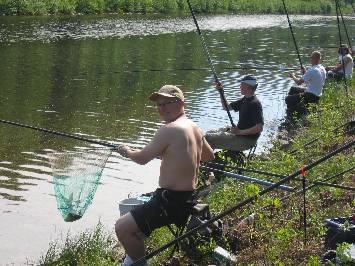
Carp are eagerly sought after by anglers in Europe as they are considered highly prized coarse fish that are hard to hook.  Carp is also valued as a source of food and is the typical Christmas dinner in some areas of Europe.  In the United States, carp is considered a trash fish and is not thought highly as a food source. Their  are some angling groups that see sporting assets in the species and are trying to bring attention to the carp as a sport fish.  The common argument I hear regarding carp is that they are bottom feeders that will eat anything and are not worth fishing for less alone to eat.  Catfish are bottom feeders as well and are known to eat anything and I love to catch and eat catfish.

Angling for Carp

Carp are bottom feeders and so the preferred method of fishing for carp is to use a bottom water fishing rig.  A popular rig is to use a bell sinker with a weighted leader line that sits on the bottom.

Carp prefer to feed near some form of cover so areas around reed beds, sand bars, sunken trees and drop-offs are prime spots to place a line.  A hooked carp will run for cover and an angler needs to be using a large reel, heavy test line on a heavy rod to absorb shocks and to keep the carp away from snags.