Fish Finder | Fishing Riggs

Trout are cold water fish and as the water temperatures continue to drop as we move into winter months, trout are coming to the surface more regularly.  I catch more trout in the bitter winter months here in Utah than any other time.  The fish are hungry and the water temperature is just right for them.
Fishing Riggs

The following is what I would call the best trout fishing rigg that I have ever came across.  It is a simple fishing rigg but highly effective and productive.  Before I get into this, it is important to know how to use it and why this fishing rigg is an effective trout fish finder.

I am active angler meaning I don’t just cast out a line with a bobber and let it sit out their waiting for a fish to come and take it while I’m sitting on the shore shivering.  I believe that if you are going to catch the limit, you need to entice and trigger that strike.  This is how an angler would fish for bass or any other predatory fish; trout are no different.

This trout fish finder fishing rigg is ideal using a light test line of 2lb to 6lb.  I personally use a 4lb test line and have great success.  The key to using this type of fish finder is when the fish are within the upper layers of the water column meaning the fish are near the surface.  If the fish are down deep, you will need to use a bottom water fish finder fishing rig to get your bait within the right feeding zone.

Trout Fish Finder Fishing Rigg

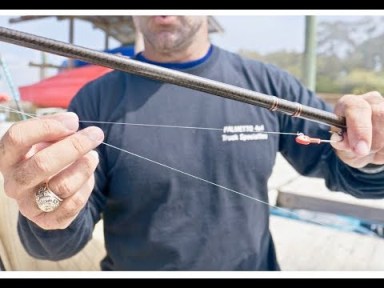
  • Attach a 2-way swivel to your main line.
  • Secure a weighted bobber such as the cigar shaped weighted bobber shown below.  Any type of bobber will work but if it is not weighted, secure a medium size split shot weight between the bobber and the swivel.  
  • Attach a 3 foot leader to the main line swivel and secure to a size 6 to size 12 hook.  I personally use a size 6 hook but you can definitely catch some big fish with a small hook; it’s all about your preference but I have less fish fighting their way off with a size 6 hook.
  • Leave enough line from tying the previous hook so that you can tie another hook one to two inches apart if so desired.  The gang hook configuration allows a more natural swim from an artificial worm by hooking the artificial worm in the head section with the first hook and the tail end with the second hook.  Leave only a little tail extending from the shaft bend of the hook. 
  • Pinch a BB size split shot weight about 6 inches above the first hook eye.  This will allow the bait to drop nicely as you alternate reeling and stopping on the retrieve.

Cast out and if using a light test line with the above weighted fishing rigg, you will probably achieve some good distance.  Reel in half a turn and stop and repeat completing varying degrees of reel turns.  This action will cause the worm to swim up and then drop and bounce back up in a wave light movement.  Trout love this and will usually strike on the drop.

I have caught plenty of bass with this technique as well but with different bait.  For trout, try different colors of honey worms or trout worms made by PowerBait.  Trout can be very picky sometimes and what worked earlier may not work now.  If the brown trout worms are not working, trying something brighter in the reds, blues and green colored honey worms.

Check out these great deals on ebay.  I tend buy most of my tackle and artificial bait and lures from ebay since I usually find great auctions and get better than walmart prices.   Four packs of these trout worms for only $10.95 is an awesome price from ebay and this includes shipping.  Click here if you want to directly to this ebay location.
Fishing Kayaks

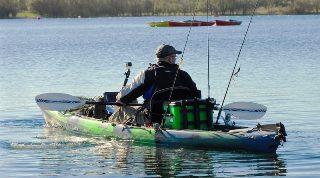
Fishing kayaking is all about fishing and kayaking to reach areas others anglers can’t get to.  

Kayaks are making a big splash for shoreline anglers who wish to remain mobile while keeping it simple.  To give you an idea of how popular this concept is, almost 91,000 web searches take place monthly on this subject and rightfully so.  I have fished off boats but primarily I fish from the shore of lakes, reservoirs and rivers.  I cherish the concept of finding a fishing spot while not having to pay big bucks for a boat and all the extra costs associated with owning a boat and wanting to get it out on the water.

Fishing Kayaks

I have spent the last couple of months researching a lightweight, highly effective means for a shoreline angler to get out on the water with ease.  The canoe was the first thought on my mind when thinking about a portable boat but then size and weight associated with a canoe made it less practical for a solo angler to deal with easily.  You can definitely buy some accessories that make it much easier for a solo angler to get a canoe into the water but it adds costs and complexity when their is not a straight shot from your vehicle to the water.

After exploring the canoe options I was introduced to a variety of fishing kayaks and the world of opportunity that fishing kayaks bring to a solo angler. Fishing kayaks cost around the same price as a canoe but come in a larger variety of shapes and sizes.  The fishing kayaks are designed completely differently than the slim, shelled kayaks that you often see going down rivers.  Fishing kayaks are designed for anglers and the primary focus is on stability.  Many fishing kayaks are so stable, anglers can stand up on them and fish standing up.  You can sit off the side without tipping the fishing kayak over top.  Fishing kayaks are designed to hold tackle boxes, include fishing rod holders, ability to attach trolling motors and anchors while keeping the overall body light weight.  From what I have seen, fishing kayaks can be kept streamlined for the truly mobile solo angler or have accessories added to it for further comfort and purposes.

One of the most appealing aspect of fishing kayaks is that most weight less than 75 pounds, come in sizes ranging from 8 feet to 12 feet and can access areas that boats can’t get into either since fishing kayaks do not require much water to float in and resist getting snagged in thick vegetation where the bass love to hide in.

Here are some options for a Solo Angler who wants to be able to get into the water and to broaden their fishing range.

The following platforms are in order of my preferences and cost does play a role so the list is based on my budget of not really wanting to break $500 but I will include some wish list recommendations.

My first recommendation exceeds my max price but offers such a versatile fishing platform that hits my ease of transport requirement of being light weight and can carried by a solo angler to a spot along any shoreline to launch.

The NUCANOE is a combination between a canoe and fishing kayak and is specifically designed for the fisherman and duck hunter.  It is vertically unsinkable (granted, they said that about the titanic as well) and has great stability.  The benefit of the NUCANOE is that it is shaped similar to a canoe so throwing your gear or including up to three people is very easy, simply get in and go.  The 10-foot NUCANOE weights 59 pounds and hold up to 450 pounds of weight.   The stern is squared allowing an angler to add up to a 2 HP motor.  The retail price for 10-foot base hull NUCANOE is $759.00 based on the 2011 Retail Price List.

The Sport Fisher Kayak made by Lifetime is my top pick based on price, stability, ease of transport and design for an angler.  Although the NUCANOE would be the top pick if I were to flex my budget but staying within my budget of $500, the Sport Fisher Kayak is the way to go.  Actually, it is dang near impossible to purchase any fishing kayak for $500 or less but the Sport Fisher Kayak can be found on Amazon for $499 while the retail is $600.  The Sport Fisher Kayak line is a sit on top style kayak specifically designed for stability allowing an angler to stand up and fish while providing an ultra-stable platform that weights only 60 pounds.  This fishing kayak can also hold up to three people but you will have to reconfigure the seats and layout to do so.  Cargo space is limited and isolated to one specific area.  Since the sit on top kayak is not so quickly adaptable and limits your freedom of movement compared to the NUCANOE, it ranks second in the overall pick.

The Freedom Hawk Fishing Kayak is no where on my list as the price alone is unmentionable.  Okay, I’ll mention it: $1,195.  It’s a cool design as it provides three positions based on what you are doing.  The first position is closed which it looks just like a kayak with a point noise in the front and back.  The second position is with the stability wings open in which a section extends out on both sides providing ultra stability.  The third position is with the standing guide bars up which allows an angler to stand up and utilize the guide bar for extra stability.  It’s a neat design and worth viewing just to ease your curiosity.  Click here to go to the Freedom Hawk product site.

The Wilderness Systems Tarpon 130T fishing kayak is ranked third overall.  As I mentioned that $500 or less appears to be unrealistic except through Amazon with the Lifetime Sport Fisher Kayak.  This Tarpon cost around $850 and for that price, the NUCANOE is a no brainer.  The Tarpon is designed to glide over wakes and chops and offers exceptional paddling performance. The Tarpon is also a sit on top style fishing kayak and appears to have more cargo storage area than others.

Most fishing Kayaks are about the same with the same configurations.  The NUCANOE is in awesome hybrid of a canoe and fishing kayak.  The wonderful thing about the internet, give it some time and explore and you can probably get a used NUCANOE or any other type of fishing kayak for less than $500 in good condition.  I leaning towards the NUCANOE more I think about it as it can grow with me as my kids get older and will most likely want to accompany me on these types of fishing kayaking trips.