Bass Tackle Kit at Unbelievable Price

This tackle kit is at a great value.

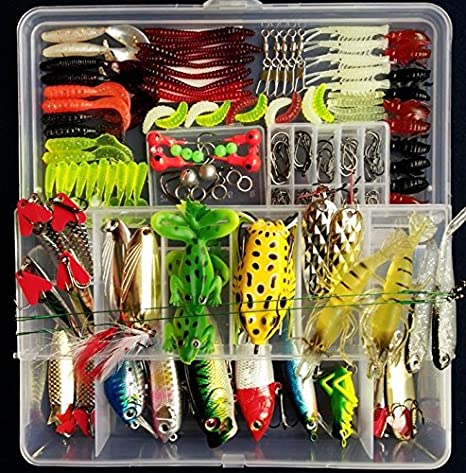
The Cabela’s TFS Easy Fish System Kit is on sale for $2.99 and normally I wouldn’t care but the amount of tackle you get for that price makes this worth mentioning.  I took the product information from my Products page so you can read more about it.  This is definitely a sale worth looking into as the regular price is around $14.

Bass Tackle Kit

Cabela’s TFS Easy Fish Systems Kits

Be ready for bass or panfishing action at a moments notice with these handy kits. Each contains oftenused items needed to catch the intended species. Available:The Bass Kit is designed for largemouth and smallmouth bass and covers all water columns regardless of the bass mood or depth. Includes a tackle box with float rig, Carolina rig, Texas rig, snelled hooks, snelled hooks and rig holder, 1/4oz. weedless spoon, 1/4oz. buzzbait, 1/2oz. rattlebait, 7.5″ plastic worms, 6″ lizards, 1/4oz. rigged 4″ grub, 4″ swirltail grubs, worm weights, egg sinkers, wide gap worm hooks, swivels, 6mm faceted beads. Click Here

Daily Fishing Report

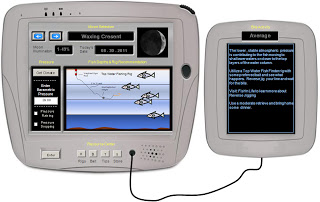
Daily Fishing Report from the Fish’n Mate fish depth finder and bite activity indicator.  Today’s fishing report is from Lancaster, California.  I don’t know if there are any fishing lakes near by but if you happen to live in Lancaster, CA and know a spot to fish, here a fishing report.

Daily Fishing Report

Lancaster, California

If you can get to a lake, GET to one!  Fish activity is HOT but will most likely degrade if a weather system sticks around.  Winds are picking up but will subside as the day ends so impact to fish activity is minimal.  Watch the pressure increase once the wind blows through.

Fish are energized and ready to take the bait.  Start off fishing near the surface or top level of the water column.  Use a fast to moderate retrieve and catch yourself some fish.

Atmospheric pressure changes frequently and fish behavior changes frequently based on the conditions.  Your fishing rig and technique should change as the conditions and fish behavior changes.

It’s not about the size of the fishing rod | it’s how you use it

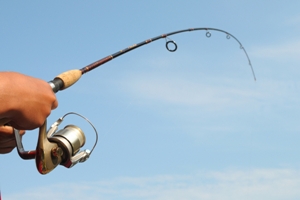
It’s hard to be an angler if you don’t have a fishing rod.  The difference between a fishing rod and fishing pole comes down to the equipment.  You can have a fishing pole without a fishing rod but just don’t count on catching fish.  You can’t have a fishing rod without a fishing pole.  Crazy logic!  A fishing rod consists of a fishing pole, reel, line and hook. A fishing pole is a flexible pole or stick that can be made of a variety of materials including fiberglass, bamboo, carbon fiber, or graphite. 

fishing rod

 A fishing pole can have a fixed line secured to the tip with bait or lure at the terminal end of the line.  A peer of mine grew up using a fishing pole made from bamboo in the country of Viet Nam.  Her father taught her how to fish using this style of fishing and they caught a lot of fish with this method.  I would assume this method works great for fishing brush along a shoreline for largemouth bass or other types of fish that seek cover along vegetation near the surface.  Most people however use a fishing rod for reeling in fish.  A fishing rod is a more advanced method of fishing as it utilizes a fishing reel to control the amount of line in the water and the line is guided through eyelets on the fishing pole.  Fishing rods come in a variety of sizes ranging from 2 to 20 feet.  The longer the fishing rod length, the greater the cast distance.  Granted, the type of line you utilize plays a huge role in cast distance as well, but mechanically, the longer the fishing rod, longer the distance achieved.  Fishing rods also come in a variety of actions.The main specifications of fishing rods are power, action, and line weight.  Power is the indicator of the type of fish species or size of fish that a particular pole is designed for.  Power is described as ultra-light, light, medium, medium-light, heavy, medium-heavy, etc.  Using an ultra-light fishing rod for a larger fish species can result in loss tackle and loss of the fish as handling this type of fishing rod with a big, strong fish would require some advance fishing skills. On the other end of the spectrum, catching a small fish species on a heavy fishing rod would provide no thrill or excitement.  Action is the responsiveness of the fishing rod to bending force and the speed of which the fishing rod returns to its neutral position.  Action is described as slow, slow-medium, medium, medium-fast, fast or some other combination.  Slower action fishing rods have more flexibility near the butt of the fishing rod while faster actions have more flexibility near the tip of the fishing rod.  The fishing rod’s action can change based on the line weight that an angler uses.  If an angler has a lighter weight line than the specified line weight range, the line is at risk for premature breaking as the rod will not bend accordingly with the pull of a fish.  A heaver weight line could result in the fishing rod snapping.  Fishing rods are also designed based on specific line weight ranges.  Line weight is recorded as pounds of tensile force.  So an 8 pound line will theoretically hold 8 pounds of weight before exceeding its maximum strength and breaking.  It is possible to catch 14 lb fish with a lighter line but care and skills will have to kick in as not to break your fishing line.  Allowing the fish to wear itself out and by not fighting pound to pound will allow you to enjoy an extra long time of fighting and reeling in a fish.

Fishing the marsh of Utah Lake

Fishing Utah Lake near the State Park in Provo, Utah.

I headed out Sunday evening looking for a new area to fish along Utah Lake in Provo, Utah.  Typically, I have fished along the northwest side of Utah Lake near the pump houses but I wanted to try see what the other side have to offer.

Fishing the marsh of Utah Lake

Utah Lake, Utah
I arrived to the State Park entrance and that is as far as I got as I wasn’t about to pay $9 to enter the State Park just to fish for couple of hours. After quizzing the gate guard about other areas nearby to fish that won’t cost me anything but time, I headed to a remote stretch of old road that skirts the local airport and the shoreline.  I couldn’t find a good spot as the brush was so thick and mosquitoes were starting to come out in swarms.

I probably found the best spot along that entire stretch as I had access to a wide area to fish without having to traverse through the marsh.  The largemouth bass were active and a pretty good size.  I spent 30 minutes fishing with a weedless rig with a water bobber attached to get some distance.  It was a great experience to hone my skills in fishing in heavy vegetation and I took advantage of it.  No tackle was lost in this lesson!  If I had actually caught a fish, the story would be different regarding not losing any tackle.  There was so much debris that I would had to fight the fish through just to get it to me that I would probably have lost the fish and the terminal tackle.

Utah Lake along the airport outer road.
I managed to get out there before the mosquitoes came out in full force and capture some pictures of the area and of the sunset.  I wouldn’t go back to this area or probably to Utah Lake unless on a boat as there are just no good areas to access the shore unless you want to pay.  I don’t mind walking away skunked ( I do mind a little) but there is nothing worse than paying and walking away with nothing but a sad story of failure.

Utah Lake has a variety of fish and if you can find a good spot, it could be a fun time.  I did fish off the Saratoga Springs Marina couple of months ago and caught a White Bass.  I don’t recall needing to pay unless you are launching a boat but the shoreline is very limited and could get overly crowded easily.  Utah Lake has largemouth bass, walleye, white bass, carp, channel catfish, bullhead catfish, black crappie and possibly lake trout.  It is a shallow lake and gets plenty active with boaters.

For the hour I spent driving to that location and dealing with all the road construction, I will probably head to Settlement Canyon Reservoir or Grantsville Reservoir at near Tooele, Utah next time.  If you are in the mood for some white bass, stick to the northwest area near the pump houses or fish the Provo River inlets.

Once fall and winter moves in, I’ll give Utah Lake another try as there are some good size fish in that lake and a variety.

Fishing Kayak or canoe

Fishing Kayak or canoe could be a great addition to your fishing fun.

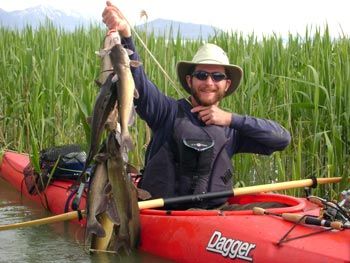
As much as I like fishing from a shoreline it is nice sometimes to get out into the water and fish along the shore and get into deeper waters.  Some species of fish are hardly found near the shoreline and to access those waters, a boat of some type comes in valuable.  In addition, the fishing rig and techniques to successfully catch those types of fish such as walleye, lake trout or smallmouth bass are best practiced from a boat.

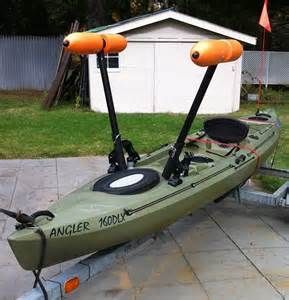
Kayak’s have come a long way in design and are becoming a great alternative for those who want to fish from a  platform and don’t have a boat or want the logistics of owning a boat.  Fishing kayaks are designed differently than whitewater kayaks as fishing kayaks are more open with storage compartments, different hull design that makes them practically impossible to flip over.  In addition to their stability, fishing kayaks offer some other great benefits for those who want to fish off the shore but without the hassle.

Fishing Kayak or canoe

Fishing Kayaks are light weight with 70 lbs being the max weight on most of them even with the bells and whistles.  Many are in slightly under 50lbs and range around 10 feet in length which makes it easy to transport in a SUV or minivan or secured to a vehicle rack.  The size and weight also makes it easy for an angler to carry it to the shore and launching.

The prices range significantly based on design and comfort. Maneuverability, stability and speed are key elements when considering a fishing kayak and the price reflects these elements.

Another option that provides a stable, more roomy alternate to a fishing kayak is the canoe.  A canoe can be transported via a vehicle top rack, is low weight but still heavier and bulkier than a kayak.  A canoe supports more people on board although some kayaks are designed to hold three people.  For added stability, a stabilizer bar can be mounted to a canoe as  it can be mounted to a kayak as well.

Canoes range from 14 feet to 18 feet and offer versatility in regards to adding accessories such as a motor.  Some kayaks also offer a design that supports a trolling motor but a canoe can handle small motors. Canoes should be evaluated based on maneuverability and ease of paddling.

Canoes and kayaks range in similar price based on performance and features.  Canoes offer an additional value by being able to carry more people and gear and can be a fun activity to do with the family if fishing slows down.

Either way you go, having an option to get out on the water and expand your fishing horizon and depth is a benefit.  Both fishing kayaks and canoes offer a great affordable option to the angler wanting to get out on the water without a bunch of hassle or added cost.

How to Make a Fishing Jig

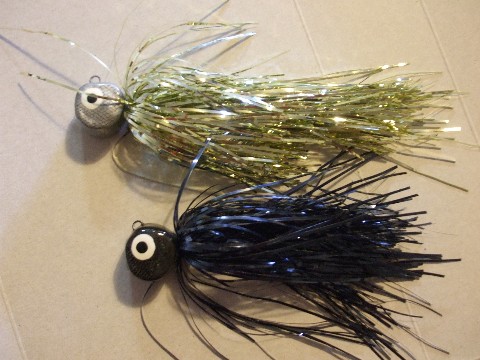
Fishing a jig with a skirt or twist tail artificial bait can trigger aggressive strikes from large trout.  Having jigs of varying sizes allows an angler to fish streams by allowing the small jigs to flow with moving water to fishing deep lakes.

How to Make a Fishing Jig

As with any fishing lure, jigs range in price from couple of dollars to ten dollars.  Of all the fishing lures that a resourceful angler can make themselves, a fishing jig is fairly easy and quick to make.  The following instructions are simply to make a fishing jig.   Look for the upcoming post on how to make a fishing jig with skirt and how to apply a twist tail artificial bait to your jig.

How to Make a Fishing Jighead

Step #1: obtain a long shank hook.  For this demonstration, I used a size 6 hook and larger split shot weight.  For micro-jigs or mini-jigs, use a size 8, 10 or 12 and an appropriate size split shot based on the hook size.

Step #2: Pry open the split shot so that it is wide enough to fit around the shank of a hook.  Then crimp the split shot weight around the hook shank.  Flatten sides a little and vary this as you create other jigs. This step must be done to create the jig shape and effect but how you crimp the weight is not that important so vary it from jig to jig.

Step #3: soak the split shot in vinegar or lemon juice for a couple of minutes to allow the paint to stick better.

Step #4: Obtain enamel paint (model airplane paint) and dip the hook with the weight end first.  In this example, I did not apply petroleum jelly to the hook eye in order to keep the eye cleaned out but do so unless you don’t mind cutting that section off once dry.  Apply two coats by dipping, spraying or brushing on.  Dipping is by far the easiest method to apply a good layer of paint.

Step #5: Once the second coat of paint is dry, obtain two sizes of nails and with the larger nail, dip the flathead part of the nail in paint and create the eye.  In this case, I used white.  Then once the main eye is dry, use the flathead part of the smaller nail and dip into another color of paint and create the eye pupil.  If so desired, add some flare such as red or orange to the bottom of the jig to represent an injured prey fish.

Step #6: wipe away the petroleum jelly from the hook eye or cut away the paint so that you can access the hook eye.

General Guidance

  • Fishing clear water conditions, try using a pearl white color.  Also works great in the morning and night hours. If pearl white isn’t triggering a strike, switch to a perch color jig.
  • Bright days use a sparkly color jig or fish deep with a dark brown or black jig.
  • Fishing urban fisheries, use a yellow patterned color mini-jig with pearl white highlights.
  • For stained water conditions, use a straight yellow type jig.
  • Check out how to catch trophy fish to see the types of fish that go crazy for micro-jigs.

Utilizing a mini-jig or micro-jig following these general guidelines will trigger some aggressive strikes from large trout including brown trout.  Brown trout are one of the hardest species of trout to catch and they will go crazy for a mini-jig.
Utah Fishing Reports and hotspots

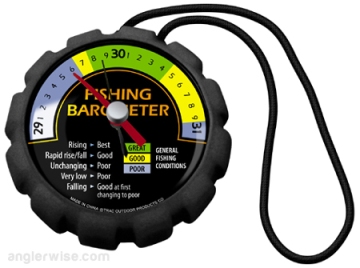
Fishing report information on your favorite fishing spot is good information to keep in mind but there are such things as a fishing forecasts.  Similar to weather forecasts, fishing forecasts takes historically data on how fish re-act to changes in climate, water, lunar cycles to predict how fish will behave.  Also like weather forecasts, sometimes it wrong.  But don’t discount a fishing forecast because it is based on statistical models and therefore is based on probability.  A fishing report tells you somewhat recent historical information on how active a fishing spot is and what seems to be working.  That is great information! However, the down fall with solely relying on a fishing report is that it is reporting on an event that has already happened.  For those who spend time on the water fishing, you know that things change quickly.  One minute the fish are jumping out of the water at you and the next, dead activity.  The variables such as climate conditions, water temperature and clarity, new hatches being introduced all effect fish behavior.

Fish are not constant and the variables that influence fish activity are not constant and neither should be the way you fish.  As the conditions quickly change, an angler needs to pick up those cues and modify their fishing rig, technique, bait and method to stay active reeling in fish.  The main point here is to learn the cues that influence fish behavior and focus on utilizing fishing forecasts that predict fish activity.

This fishing report for Utah is provided by the Utah Division of Wildlife.       

How to Pick a Fishing Lure

Fishing lures come in a variety of sizes, shapes and weight and are designed to resemble a prey fish through movement.

 Fishing Lure

Fishing lures work on all predatory fish but based on the fish species, water condition and depth, some types of fishing lures are better than others.  When determining the type of fishing lure to choose from – consider the following in order:

  • Depth Control
  • Speed Control
  • Vibration
  • Shape
  • Size
  • Color
  • Sound
  • Scent
  • Taste

Depth control should always be the number one consideration when selecting a lure.  Achieving the desired depth and staying within that feeding zone is key to opening that door to trigger a strike from a fish.  Depth control applies to all types of lures such as surface lures, spoon lures, plugs, spinner baits, swim baits and jigs.  Utilizing weighted lure bodies or sinkers attached to the lure are methods to achieve different depths.

Speed control works hand in hand with depth control.  Controlling depth with the speed of your line is dependent on the type of lure you are using and changes from type to type.  Speed up a spinnerbait or a sinking jerkbait and these lures rise up while slowing down the speed results in these lures diving deeper.  Speed up a crankbait and it will dive deeper while slowing down the retrieve speed results in it rising.  Speed also pertains to how you swim the fishing lure.  Varying the speed of the retrieve creates vertical action as the lure rises and drops.  The speed also creates varying effects of swim motion based on the design of the fishing lure.  So knowing how to effectively swim the fishing lure by controlling line speed is crucial in getting a bite or just a swim-by.

Vibration is caused when water is moved and the action of a fish’s tail as it pushes its body through the water creates movement of water.  Vibration is highly important as fish can feel the bait fish swimming and can even identify the type of bait fish by its vibration.  Bait fish have unique vibration signatures as determined by the size and shape of the bait fish.  Selecting a fishing lure that mimics the vibration of the popular prey fish in the body of water will attract fish from all around to the fishing lure.  The appeal of a fishing lure color is lost up to this point as fish would not have even seen the color unless the lure happened to move in front of the visual range of the fish.  Vibration will bring the fish to your lure as they are interested and curious to find out what is creating that vibration.  In murky and cloudy water conditions, color has even less effect on triggering a strike.

Depth, Speed and Vibration are the three most influential element of determining which type of fishing lure to use.  Depending on the water temperature, season, time of day, water conditions, fish will behave differently and using the right fishing lure to meet those conditions will improve your fishing success rate.  The remaining elements such as size, shape, and color are important but should be a secondary consideration to fine tune the appeal of the fishing lure.

Daily Fishing Report

Atmospheric pressure changes throughout the day and can be compared to valley and mountains as it moves across the country.  Atmospheric pressure changes and lunar phases have significant influence on fish behavior in regards to depth and activity level.

Today’s fishing report is for Kansas City, Missouri and St. Louis, Missouri.  Approximately four hours apart from each other, both cities have completely different atmospheric pressure readings that affect fish differently.

Daily Fishing Report

Kansas City, Missouri

Click on the image to see a close up.  This application is called the Fish’n Mate and it predicts fish depth and bite activity based on atmospheric pressure and lunar phases.  In addition, it provides illustrations of a recommended fishing rig and technique to use to catch fish.

Kansas City, MO current temperature at 9:31am MTN is 77 degrees with a barometric pressure reading of 29.88.

Expect Average bite activity and with the lower than average atmospheric pressure reading, fish can be found across all levels of the water column but concentrating within the top half of the water column. Use a top water fish finder and with a drop type jig action and the fish will be fighting.

St. Louis, Missouri

Currently, the atmospheric pressure is at 30.03 which falls within normal ranges.  Expect average bite activity and have fun trying out different lures and rigs.  Fish can be found at all levels of the water column.

Purchase the Fish’n Mate for only $4.95 and download it immediately!  Original price: $19.95 and this great promotion won’t last long!

A Dynamic Fish’n Life

Fish’n Life has a new look going into the fall season.  Fish’n Life is growing rapidly month to month and ease of access to specific articles and webpage load performance is top priority.

A Dynamic Fish'n Life

In addition to a new layout and streamlined sitemap, Fish’n Life has some new things to tell you about.

The initial goal of the Fish’n Life experiment was to share the passion of freshwater, shoreline fishing to beginners and those looking for new tips and tricks to catching fish.  I am firm believer that someone wanting to fish does not need to purchase hundreds or thousands of dollars worth of equipment and tackle to catch fish.   Fishing is fun and trying to figure out how to trigger a strike (the science behind fishing) is addictive and let’s face it, there are many worse things to be addicted to in this world.  Fishing is a great family event and kids love catching fish. Fathers and mothers, go bond with your kids by a lake and keep everyone out of trouble.  Fishing is also a solitude hobby.  I spend many an evenings at a lake in conversation with God while watching some of the most beautiful sunsets.  Fish’n Life will always be focused on spreading the word of how to catch fish.

The second goal of fishing is to be your go to site for most things fishing.  The site will continue to grow with topics providing fishing reports, how to tie fishing knots, different fishing tackle and tips on how to catch a variety of fish species including catfish, bass, and trout.

The third purpose of Fish’n Life is to provide product reviews that are either sponsored (paid) or non-sponsored on a variety of fishing and outdoor items or resources.  These product reviews are part of my last goal of bringing in additional income utilizing the World Wide Web.  There are plenty of people who make thousands of dollars a month from blogging or other means from their website.  As I discover these tips and methods I will continue to share those as well.  Many of these tips have resulted in dramatic shifts in web traffic for me.

Online Income is a means of which I use to support my fishing passion.  I rely on Google Adsense and other affiliate and ad sites to display quality content ads related to my topics. I also write paid product reviews as mentioned above.  If you have a fishing related site or products and wish to take advantage of my traffic achievements, please contact me with details. I am also open to providing ad spot locations for those who wish to advertise directly on my site.