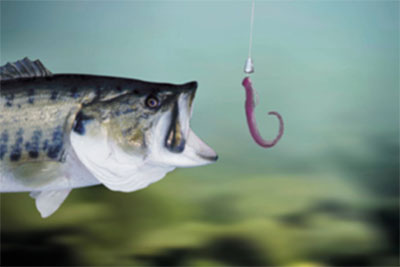
Sometimes fish just prefer a wax worm instead of the ole faithful night crawler.
Last winter I caught more trout with a wax worm than with any other worm. I was using artificial wax worms and having a variety of fishing bait worms in your tackle box will pay off when the fish are being picky. The great thing about artificial fishing worms are that they can be stored without risk of dying or going bad and come in a variety of sizes, shapes and colors.
I personally had a lot of success with the yellow wax worms. Other angles I fish with keep a variety of colors on hand as the color makes a difference depending on water color and fish preference at that time. Worms are great fishing bait when fishing for the average size of a certain species but if you want bigger fish, you will need to fish with prey fish type bait. Larger predatory fish will primarily focus on prey fish as their meal source than on insects and worms. Using a larger worm size can bring in good size fish as the temptation is too difficult for larger fish to pass up on.
Night crawlers, red worms, and wax worms are the popular types of fishing baits and each have their unique characteristics that attract different species and sizes of fish. Wax worms are great at enticing a strike from crappies, sunfish, trout, perch, walleye, pike and other gamefish species.
Wax worms are technically not worms but caterpillar larvae and are often referred to as waxies. Anglers can buy wax worms (meal worms) in the same location as they would buy night crawlers or red worms. I usually get my live worms from Wal Mart but most outdoor sportsman stores would sale them as well.
Fishing is fishing and if you can’t get the big one you’re after, a fish is a fish. Keep a supply of wax worms in the ready and have fun.
Signs of Fall at Settlement Canyon Reservoir, Tooele, UT Signs of Fall are know starting to appear. This picture was taken a week ago on September 17th of Settlement Canyon Reservoir in Tooele, Utah.
Fall months mean the water temperature at the surface will be cooler, vegetation along the shoreline will be dying off and driving cover seeking fish such as bass to lower layers of vegetation. Colder surface waters will contribute to great surface hits as cold water fish are moving out of the cold deep.
Fall months mean that fish activity will increase as fish begin stocking up energy to survive the upcoming winter months. During the winter months, food source is very limited and oxygen decreases and fluctuates within the lake as vegetation dies off. This results in harsher conditions for the fish as the water becomes murky. Fish populations focus on conserving energy and seek cover or structure for protection. During these conditions, bait presentation and slow lure retrieve is key to triggering a strike. The fish will only expel energy on prey fish that will not only replenish the expelled energy used to strike the bait but to gain energy.
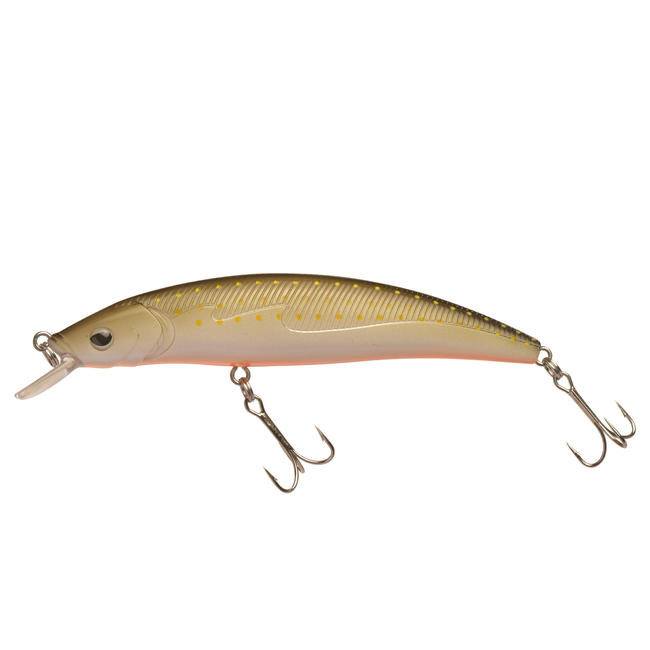
The increased fish activity during the Fall months means fish are at all levels of the water column and using a quick lure retrieve will trigger strikes. The key to Fall fishing is using a swim bait that mimics targeted fish favorite food source. When fishing for Pike, utilizing a Trout type swim bait will result in numerous strikes since Pike love to feed on Trout. For larger Trout, lures that mimic minnows and other small prey fish work well. Worms and insects type baits will work great for panfish.
Fall months also mean the summer homes are changing and fish are heading away from shore. As vegetation withers away, bass and other cover seeking fish species are heading deeper and deeper to remain with the surviving vegetation as Winter moves in. As Fall weather moves in, fishing around locations where shallow water drops off to deeper water are a good idea. Fish will head deep during Fall weather patterns but will remain active while they focus on building energy.
Another benefit of the cooler Fall weather is that less people are out fishing and fish are staying hungry. Take of advantage of the colder nights and take advantage of the increased activity.
Fishing with a micro-jig is great for triggering strikes in most conditions. The benefit for using a micro-jig is the versatility that it provides in finding and triggering trout strikes from small streams to deep lakes.
For fishing streams, cast the micro-jig quartering upstream and keep a straight line as the micro-jig goes into moving water. Keeping a straight line will allow the angler to feel slight pressure as a trout takes the lure. These micro-jigs are also known for triggering aggressive hits from trout so a short, quick hookset is all that is needed to begin the fight.
Fishing a lake with a micro-jig is first about finding the trout and then fishing the micro-jig properly. When fishing a lake during the heat of the day look for the dark color patches on the surface that indicate pockets of deeper water that are common to hold school-up trout. For early morning and evening casts, fish the shallower coves as trout are feeding off the surface. If the lake has recently been stocked with large trout, these trout will naturally move to shallow waters which are similar surroundings to what they are used to in the hatchery. As they adapt to their environment, these trout will move to deeper waters.
Another general tip to catching trophy size trout with micro-jigs is to make a long cast in front of the dimple created by trout near the surface and slowly bring in the micro-jig across the ripples. This will often entice a feeding trout to strike.
The key to the technique of fishing a micro-jig is to cast long utilizing a weighted bobber to help gain distance with a light test line and let the micro-jig sink. Most strikes occur as the jig is dropping. Slowly reel in and allow the jig to drop. Continue this sequence slowly and allow the jig to entice a strike with the dropping motion. The slow activity will also allow trout to get a look at the jig and take it.
One of the latest fishing trends as identified by PRWEB, “Vertical Jigging: The Newest Fishing Trends” had revealed that the oldest form of fishing lures, the jig is making a huge comeback. Some Japaneses fishing lure manufacturers are coming up with new jig designs for vertical jigging called: the knife, the inchiku and the tai-kabura.
The Knife jig is long and skinny resembling a knife blade and is designed with the center of gravity in the tail or centered part of the jig. The jig that has the weight centered will allow it to flutter and the tail weighted jig design will sink without any type of action. This type of jig will glide through the water on the drop rather than sinking straight down. Knife jigs are intended to attract and catch any species of predatory fish.
Inchiku jig is a two part jig that consist of the weight and a lure that resembles a small octopus with hooks. It is designed to fish the floor of a body of water for the bottom dwellers such as flounders, halibuts and snappers.
Tai-Kabura jig is also designed to fish the bottom layer of a body of water and looks like an octopus or squid. These lures come in smaller sizes than the inchiku jig.
Both the Inchiku fishing jig and the Tai-Kabura fishing jig are intended to be fished less aggressively than the knife jigs. These jigs are vertical jigs and an angler simply drops the jigs straight down and retrieve. Utilizing jig technique called ‘mechanical jigging’ which is dropping and raising the rod tip quickly as the line is retrieved, will cause the knife jig to swim very erratically enticing predatory fish of all types. The inchiku and tai-kabura jigs are intended to be fished very slowly, hopping it along the lake floor after a cast.
These vertical jigs will entice a fast and violent strike from predatory fish.
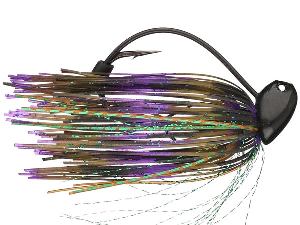
A great way to trigger a strike from any type of predatory fish is to use a jig and trailer.
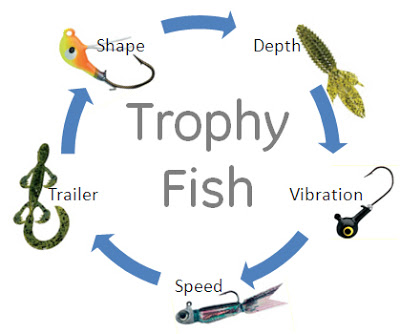
There are a variety of jigs on the market and are very popular for multi-fish anglers. Jigs have evolved over the years from simply being a vehicle for baits to being used independently to trigger strikes. With the different style and shapes of lead heads that alone trigger strikes in addition to a variety of trailers that create vibration and visual appeal the jig is a dangerous fish magnet.
The graphic above shows the most significant characteristics when selecting a fishing lure. There are several jighead shapes that create different effects and movement when being retrieved and dropped. The primary technique for using a jig is to reel in and then let the jig drop. Fish usually strikes during the drop and by adding a trailer to the jig hook, different vibrations or sounds are created that attract fish to the jig. Utilizing an alternating speeds and stops allows an angler to attract fish with the swim and drop. Another jig technique is to slowly walk a bottom bait along the lake floor.
Keep an eye out for the next posts on the different types of jig heads or lead heads and the different types of trailers.
Join the newly created Fish’n Life Facebook page and watch for Free promotions.
Utah offers a wide variety of options if you looking to go fishing. Spend the day hiking to a mountain lake or hit the blue ribbon rivers or stick close to home with your local community ponds. If you are looking for a great place to fish that out of the way but not too far out of the way, go to Strawberry Reservoir.
Cutthroat trout caught in Strawberry Reservoir Strawberry Reservoir
Strawberry Reservoir is one of the top trout fisheries in Utah and offers great fishing for rainbow trout, cutthroat trout and kokanee salmon. Fish grow quickly here in Strawberry Reservoir and the fish tend to stick to the cooler waters so fishing from a boat or float in the summer provides the best results while shoreline anglers do well in fall and winter.
Strawberry Reservoir is located near Heber City, Utah and is at an elevation of 7,602 feet. Strawberry Valley is part of the Colorado River drainage.
Likely catches in Strawberry Reservoir are Rainbow Trout, Bear Lake cutthroat trout and kokanee salmon. Rainbows and cutthroats around 24 inches in length are caught regularly.
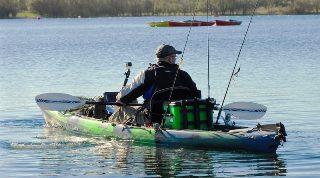
Fishing kayaking is all about fishing and kayaking to reach areas others anglers can’t get to.
Kayaks are making a big splash for shoreline anglers who wish to remain mobile while keeping it simple. To give you an idea of how popular this concept is, almost 91,000 web searches take place monthly on this subject and rightfully so. I have fished off boats but primarily I fish from the shore of lakes, reservoirs and rivers. I cherish the concept of finding a fishing spot while not having to pay big bucks for a boat and all the extra costs associated with owning a boat and wanting to get it out on the water.
I have spent the last couple of months researching a lightweight, highly effective means for a shoreline angler to get out on the water with ease. The canoe was the first thought on my mind when thinking about a portable boat but then size and weight associated with a canoe made it less practical for a solo angler to deal with easily. You can definitely buy some accessories that make it much easier for a solo angler to get a canoe into the water but it adds costs and complexity when their is not a straight shot from your vehicle to the water.
After exploring the canoe options I was introduced to a variety of fishing kayaks and the world of opportunity that fishing kayaks bring to a solo angler. Fishing kayaks cost around the same price as a canoe but come in a larger variety of shapes and sizes. The fishing kayaks are designed completely differently than the slim, shelled kayaks that you often see going down rivers. Fishing kayaks are designed for anglers and the primary focus is on stability. Many fishing kayaks are so stable, anglers can stand up on them and fish standing up. You can sit off the side without tipping the fishing kayak over top. Fishing kayaks are designed to hold tackle boxes, include fishing rod holders, ability to attach trolling motors and anchors while keeping the overall body light weight. From what I have seen, fishing kayaks can be kept streamlined for the truly mobile solo angler or have accessories added to it for further comfort and purposes.
One of the most appealing aspect of fishing kayaks is that most weight less than 75 pounds, come in sizes ranging from 8 feet to 12 feet and can access areas that boats can’t get into either since fishing kayaks do not require much water to float in and resist getting snagged in thick vegetation where the bass love to hide in.
Here are some options for a Solo Angler who wants to be able to get into the water and to broaden their fishing range.
The following platforms are in order of my preferences and cost does play a role so the list is based on my budget of not really wanting to break $500 but I will include some wish list recommendations.
My first recommendation exceeds my max price but offers such a versatile fishing platform that hits my ease of transport requirement of being light weight and can carried by a solo angler to a spot along any shoreline to launch.
The NUCANOE is a combination between a canoe and fishing kayak and is specifically designed for the fisherman and duck hunter. It is vertically unsinkable (granted, they said that about the titanic as well) and has great stability. The benefit of the NUCANOE is that it is shaped similar to a canoe so throwing your gear or including up to three people is very easy, simply get in and go. The 10-foot NUCANOE weights 59 pounds and hold up to 450 pounds of weight. The stern is squared allowing an angler to add up to a 2 HP motor. The retail price for 10-foot base hull NUCANOE is $759.00 based on the 2011 Retail Price List.
The Sport Fisher Kayak made by Lifetime is my top pick based on price, stability, ease of transport and design for an angler. Although the NUCANOE would be the top pick if I were to flex my budget but staying within my budget of $500, the Sport Fisher Kayak is the way to go. Actually, it is dang near impossible to purchase any fishing kayak for $500 or less but the Sport Fisher Kayak can be found on Amazon for $499 while the retail is $600. The Sport Fisher Kayak line is a sit on top style kayak specifically designed for stability allowing an angler to stand up and fish while providing an ultra-stable platform that weights only 60 pounds. This fishing kayak can also hold up to three people but you will have to reconfigure the seats and layout to do so. Cargo space is limited and isolated to one specific area. Since the sit on top kayak is not so quickly adaptable and limits your freedom of movement compared to the NUCANOE, it ranks second in the overall pick.
The Freedom Hawk Fishing Kayak is no where on my list as the price alone is unmentionable. Okay, I’ll mention it: $1,195. It’s a cool design as it provides three positions based on what you are doing. The first position is closed which it looks just like a kayak with a point noise in the front and back. The second position is with the stability wings open in which a section extends out on both sides providing ultra stability. The third position is with the standing guide bars up which allows an angler to stand up and utilize the guide bar for extra stability. It’s a neat design and worth viewing just to ease your curiosity. Click here to go to the Freedom Hawk product site.
The Wilderness Systems Tarpon 130T fishing kayak is ranked third overall. As I mentioned that $500 or less appears to be unrealistic except through Amazon with the Lifetime Sport Fisher Kayak. This Tarpon cost around $850 and for that price, the NUCANOE is a no brainer. The Tarpon is designed to glide over wakes and chops and offers exceptional paddling performance. The Tarpon is also a sit on top style fishing kayak and appears to have more cargo storage area than others.
Most fishing Kayaks are about the same with the same configurations. The NUCANOE is in awesome hybrid of a canoe and fishing kayak. The wonderful thing about the internet, give it some time and explore and you can probably get a used NUCANOE or any other type of fishing kayak for less than $500 in good condition. I leaning towards the NUCANOE more I think about it as it can grow with me as my kids get older and will most likely want to accompany me on these types of fishing kayaking trips.
Versatile Artificial Bait – Crayfish Imitations Tube Jigs are perfect for when nothing else seems to work. It is a simple plastic bait but consistently delivers in tough conditions.
What is a Tube Jig Tube jig plastic bait are round headed, hollowed plastic tube that have a streamers at the end. Tube jigs are threaded onto a jig head or lead head with the hook protruding through the end by the streamers. Tube jigs are designed to be fished with a slow, subtle action that imitates a minnow or crayfish depending how it is fished.
How to Rig a Tube Jig Plastic Bait Insert the hook in the top quarter of the plastic bait and thread the hook to where it is protruding from the end of the tube where the hook point is above the streamers. The tube body is flexible and will allow the jig head or lead head to be inserted into the tube. Insure the leader line is also attached to the jig head.
How to Fish a Tube Jig Tube jigs are designed to imitate a fleeing minnow or scurrying crayfish depending how it is fished.
One of the first decisions an angler needs to make after deciding to use a tube jig is to select the desired jig weight. A light lead head will allow the tube jig to slowly descend to the bottom while a heaver tube jig will more quickly move downward and can be moved along the bottom imitating a creyfish.
The method to fish a tube jig is to use a six to eight pound test line and fish this type of plastic bait near cover where awaiting bass are lurking. Cast the line out and keep the rod at a 45 degree angle and the tube bait will sink in one direction and once the slack in the line is tight, the plastic bait will swing in the other direction. Continue dropping this line creating this zig-zag action until it hits the bottom. Let the tube sit on the bottom briefly before reeling up and continuing this cycle. Another method is to allow it to hit bottom and either bounce it back or drag it slowly along the bottom.
Where to buy Tube Jigs Ebay is always a great choice to buy fishing tackle at great prices. This seller is selling a lot of 25 tube jigs with a beginning bid of $0.99. If you don’t think you could win this type of auction, think again. I won 5 piece bass popper lures for $2.00 including shipping cost.
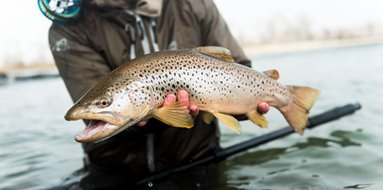
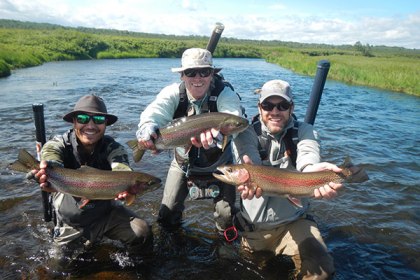
North America has some of the best trout fishing in the world.Brook Trout caught in the Wasatch Mountains, Utah Now that Fall is setting in and temperatures are dropping my excitement to head out on trout fishing trips is growing. I call my late fall and winter fishing trips a Miserably Wonderful time of trout fishing. The cold can make the fishing trip miserable while the allure of trout fishing and catching trout make it a wonderful outdoor experience. Depending on the type of trout in your local waters, trout fishing can be easy and mindlessly entertaining to mind bending complex as you struggle to figure out how to trigger a strike from a trout species that doesn’t fool easily like a lake trout or brown trout.
Forbes.com published an article several years ago listing the top ten trout fishing locations in North America. Of course this is a list that is arguable as most anglers favor their local spots but here is what Forbes published as their top ten fishing spots.
The top ten fishing trips to trout waters (according to Forbes.com)
1. West Yellowstone, Montana The following rivers in West Yellowstone are hot trout fishing locations and would make great fishing trips due to the beauty of the area and the many alternative hot trout fishing spots to fish. Firehole River, Gibbon River and Slough Creek are great fisheries to explore.
2. Missoula, Montana The Blackfoot and Bitteroot river are fishing trip options as is the Missouri River where anglers can find trophy size rainbow and brown trouts.
3. Roscoe, New York The Delaware River, specifically the East and West Branches has some of the best trout fishing for rainbow trout and brown trout in the Eastern part of the United States. Other fishing trip options include the Beaverkill River and the Willowemoc Creek.
4. State College, Pennsylvania Brown trout are abundant year around and anglers across the world take fishing trips to fish the Little J or Little Juniata. Spring Creek is also a great option for a fishing trip while visiting State College as this creek runs directly through town.
5. Grayling, Michigan Fishing trips here should include the Au Sable River, Manistee and Grayling rivers.
6. Calgary, Alberta Fishing trips to Calgary offer chances to catch the biggest stream-bred rainbow trout in the world in the Bow River. Two other mountain streams, the Crowsnest and Livingstone provide anglers an opportunity to fish for native bull and cutthroat trout.
7. Glenwood Springs, Colorado Fishing trips to Colorado should include a stop at Glenwood Springs as the Frying Pan stream and Colorado River are great trout waters. The Frying Pan is considered one of North America’s most consistent trout streams.
8. Mountain Home, Arkansas Fishing trips to Mountain Home should not disappoint as the White and Norfolk Rivers have some of the biggest non-migratory brown trout in the wold. These rivers can be fished year around and consistently produce huge brown trouts ranging around 30 pounders.
9. Redding, California There are four areas worthy to schedule a fishing trip to. The Lower Sacramento has some of the most power rainbows in the world. McCloud River has the famous leaping rainbows and the Hat Creek and Fall River are have very big and demanding trout.
10. Asheville, North Carolina Fishing trips to Asheville brings you to brook trout country as they are the only trout native to the east coast and fishing any of the Appalachian Mountain streams would result in a fun day of catching brook trouts.
Staying warm, dry and protected while winter fishing with Under Armour Cold Gear
I’m typically an off road angler meaning I have to park and hike into where I’m planning to fish. Since this is my preferred method of finding fishing spots that are not highly fished, I have to plan differently than an on-road fisherman. Mobility and ease of transport of my fishing gear is my number one consideration.
Mobility to get into the area that I want to fish and then the mobility to get around the shoreline to find the fish is what it is about. Being adequately prepared both with the essential fishing tackle and gear and cold weather gear and accessories is key to having a productive, fun fishing day or night.
The advances in high performance athletic and outdoor clothing and accessories can not be overlooked by the off-road angler. Under Armour is an American business that provides hi-tech clothing and accessories for professional athletes. Their under armor clothing line is ideal for the active outdoors man and the light weight, quick drying undershirts, pants and jackets are ideal accessories for hikers and active anglers.
Under Armour cold gear characteristics include:
Fitted form that is built for layering
Advance knit fabric that traps heat for enhanced warmth
Lightweight 4-way stretch construction improves mobility
Superior moisture transport system that keeps you dry
Most importantly, feels smooth against the skin and prevents chafing.
Layering is key to be dry and comfortable while staying active. Check out Ebay for some great prices on their coldgear fitted mock to build layers off of.
I highly recommend exploring the Under Armour Cold Gear especially as we move into the late Fall and Winter months.