Fishing a jig with a skirt or twist tail artificial bait can trigger aggressive strikes from large trout. Having jigs of varying sizes allows an angler to fish streams by allowing the small jigs to flow with moving water to fishing deep lakes.
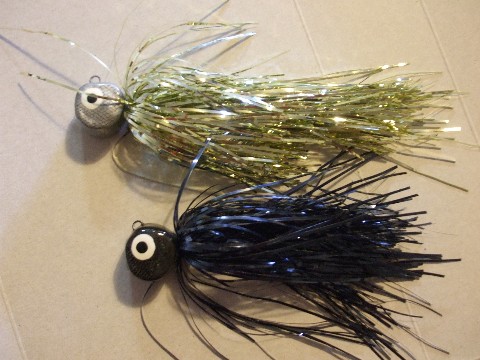
As with any fishing lure, jigs range in price from couple of dollars to ten dollars. Of all the fishing lures that a resourceful angler can make themselves, a fishing jig is fairly easy and quick to make. The following instructions are simply to make a fishing jig. Look for the upcoming post on how to make a fishing jig with skirt and how to apply a twist tail artificial bait to your jig.
How to Make a Fishing Jighead
Step #1: obtain a long shank hook. For this demonstration, I used a size 6 hook and larger split shot weight. For micro-jigs or mini-jigs, use a size 8, 10 or 12 and an appropriate size split shot based on the hook size.
Step #2: Pry open the split shot so that it is wide enough to fit around the shank of a hook. Then crimp the split shot weight around the hook shank. Flatten sides a little and vary this as you create other jigs. This step must be done to create the jig shape and effect but how you crimp the weight is not that important so vary it from jig to jig.
Step #3: soak the split shot in vinegar or lemon juice for a couple of minutes to allow the paint to stick better.
Step #4: Obtain enamel paint (model airplane paint) and dip the hook with the weight end first. In this example, I did not apply petroleum jelly to the hook eye in order to keep the eye cleaned out but do so unless you don’t mind cutting that section off once dry. Apply two coats by dipping, spraying or brushing on. Dipping is by far the easiest method to apply a good layer of paint.
Step #5: Once the second coat of paint is dry, obtain two sizes of nails and with the larger nail, dip the flathead part of the nail in paint and create the eye. In this case, I used white. Then once the main eye is dry, use the flathead part of the smaller nail and dip into another color of paint and create the eye pupil. If so desired, add some flare such as red or orange to the bottom of the jig to represent an injured prey fish.
Step #6: wipe away the petroleum jelly from the hook eye or cut away the paint so that you can access the hook eye.
General Guidance
- Fishing clear water conditions, try using a pearl white color. Also works great in the morning and night hours. If pearl white isn’t triggering a strike, switch to a perch color jig.
- Bright days use a sparkly color jig or fish deep with a dark brown or black jig.
- Fishing urban fisheries, use a yellow patterned color mini-jig with pearl white highlights.
- For stained water conditions, use a straight yellow type jig.
- Check out how to catch trophy fish to see the types of fish that go crazy for micro-jigs.
Utilizing a mini-jig or micro-jig following these general guidelines will trigger some aggressive strikes from large trout including brown trout. Brown trout are one of the hardest species of trout to catch and they will go crazy for a mini-jig.