It’s hard to be an angler if you don’t have a fishing rod. The difference between a fishing rod and fishing pole comes down to the equipment. You can have a fishing pole without a fishing rod but just don’t count on catching fish. You can’t have a fishing rod without a fishing pole. Crazy logic! A fishing rod consists of a fishing pole, reel, line and hook. A fishing pole is a flexible pole or stick that can be made of a variety of materials including fiberglass, bamboo, carbon fiber, or graphite.
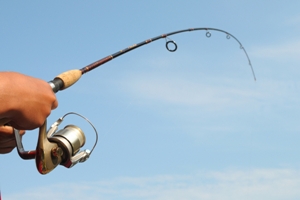
A fishing pole can have a fixed line secured to the tip with bait or lure at the terminal end of the line. A peer of mine grew up using a fishing pole made from bamboo in the country of Viet Nam. Her father taught her how to fish using this style of fishing and they caught a lot of fish with this method. I would assume this method works great for fishing brush along a shoreline for largemouth bass or other types of fish that seek cover along vegetation near the surface. Most people however use a fishing rod for reeling in fish. A fishing rod is a more advanced method of fishing as it utilizes a fishing reel to control the amount of line in the water and the line is guided through eyelets on the fishing pole. Fishing rods come in a variety of sizes ranging from 2 to 20 feet. The longer the fishing rod length, the greater the cast distance. Granted, the type of line you utilize plays a huge role in cast distance as well, but mechanically, the longer the fishing rod, longer the distance achieved. Fishing rods also come in a variety of actions.The main specifications of fishing rods are power, action, and line weight. Power is the indicator of the type of fish species or size of fish that a particular pole is designed for. Power is described as ultra-light, light, medium, medium-light, heavy, medium-heavy, etc. Using an ultra-light fishing rod for a larger fish species can result in loss tackle and loss of the fish as handling this type of fishing rod with a big, strong fish would require some advance fishing skills. On the other end of the spectrum, catching a small fish species on a heavy fishing rod would provide no thrill or excitement. Action is the responsiveness of the fishing rod to bending force and the speed of which the fishing rod returns to its neutral position. Action is described as slow, slow-medium, medium, medium-fast, fast or some other combination. Slower action fishing rods have more flexibility near the butt of the fishing rod while faster actions have more flexibility near the tip of the fishing rod. The fishing rod’s action can change based on the line weight that an angler uses. If an angler has a lighter weight line than the specified line weight range, the line is at risk for premature breaking as the rod will not bend accordingly with the pull of a fish. A heaver weight line could result in the fishing rod snapping. Fishing rods are also designed based on specific line weight ranges. Line weight is recorded as pounds of tensile force. So an 8 pound line will theoretically hold 8 pounds of weight before exceeding its maximum strength and breaking. It is possible to catch 14 lb fish with a lighter line but care and skills will have to kick in as not to break your fishing line. Allowing the fish to wear itself out and by not fighting pound to pound will allow you to enjoy an extra long time of fighting and reeling in a fish.